
Author: Łukasz Warna-Wiesławski
A quick look into Poland’s music where an underground scene is bubbling up, aiming to create a new identity against the cultural hegemony of the United States on the one side and the Russian propaganda trying to divorce the country from the West on the other.
How can a country become an independent cultural actor itself? Some say, by finally embracing the true story of one’s origin.
A Broken Legacy
Poland is experiencing a secret folklore revolution. Popularised by Adam Leszczyński’s Ludowa Historia Polski (The People’s History of Poland) and catapulted into mainstream by Joanna Kuciel-Frydryszak’s Chłopki. Opowieść o naszych babkach (Peasants. A Story About Our Grandmothers), the vernacular turn in understanding of local history resulted in hundreds of thousands of books sold and a paradigm shift in academia and the art world. For many, understanding that contemporary Poles are actually descendants of peasantry, not the gentry is a completely new notion, turning their view of reality and identity upside down.
As scholars read into the movement from all angles, one aspect remains largely ignored. The music. While Polish mainstream audiences listen mostly to local acts (69 albums and 72 singles out of 100 top selling and streaming releases in 2025 were local, Polish Society of the Phonographic Industry reports), it’s hard to find any on that list that continue or lean onto quintessentially Polish music traditions. While there’s many artists reconstructing traditional sounds or creating pan-Slavic fantasies, what about those who want to make what Polish folk could sound like in the 21st century?
There are many reasons why they are so hard to find and why they all started closing this gap so late. Over the course of history, Poland endured a series of violent disruptions. During WWII, the Nazis destroyed many of the manuscripts of Oskar Kolberg, the nation’s most vital ethnographer who laid foundations of Polish ethnomusicology. This was followed by the uprooting of millions of WWII survivors from the multicultural Eastern Borderlands to new Western territories. In the aftermath, the state established Soviet-style song and dance ensembles to manufacture a new national mythos, effectively homogenising the rich, fluid traditions of different regions. By the time capitalism imposed in the 90s, it seemed as though Polish culture had tried to kickstart itself several times, only to settle on becoming a pastiche of the American way of life.
Radical Approach
The torch is being carried on by underground musicians who try to continue the legacy that laid dormant for decades. The Radical Polish album series released by now-defunct label Bôłt that ran between 2019 and 2022 and a couple editions of Radical Polish Culture Festival can serve as an intellectual core of this new movement. With Radical Polish Ansambl delivering the first album in the series, a beautiful contemporary classical record deeply rooted in traditional melodies learned from the old masters, the Maciej Filipczuk-led seven piece, together with Michał Mendyk, the label owner, became the leaders of a new scene.
In a seminal interview in Krytyka Polityczna, Mendyk and RPA’s Mateusz Kowalski explained: “We are certainly anti-conservative because we are interested in moving forward, both aesthetically and politically. To achieve this, we need to move deeper, to the roots of our own culture, but not to understand it as a backward movement. We come from the people; it is our social genetics.”
Together they pinpoint the moment the indigenous musical language went silent. Kowalski says: “My grandmother, who came from the countryside to live in a prefab apartment building in the city, believed it was inappropriate to sing in the apartment. Because of the neighbours, because it simply wasn’t appropriate, because it was the city,” while Mendyk adds: “In my family, my grandmother’s world was perceived as somewhat… amusing. But certainly not inspiring. It was an old and inferior world. The burden of the word yokel used at school was very heavy.”
The series went on to include a Polish-French band Lumpeks exploring folk through jazz lens, an ice-cold industrial droning of Kust, an opera composed by Cezary Duchnowski and RPA’s Maciek Filipczuk, performed by the full band, mazurka mutations replacing traditional bass with an electronic pulse by Niewte and solo clarinet explorations of Michał Górczyński.
Reaching Out Beyond the Borders
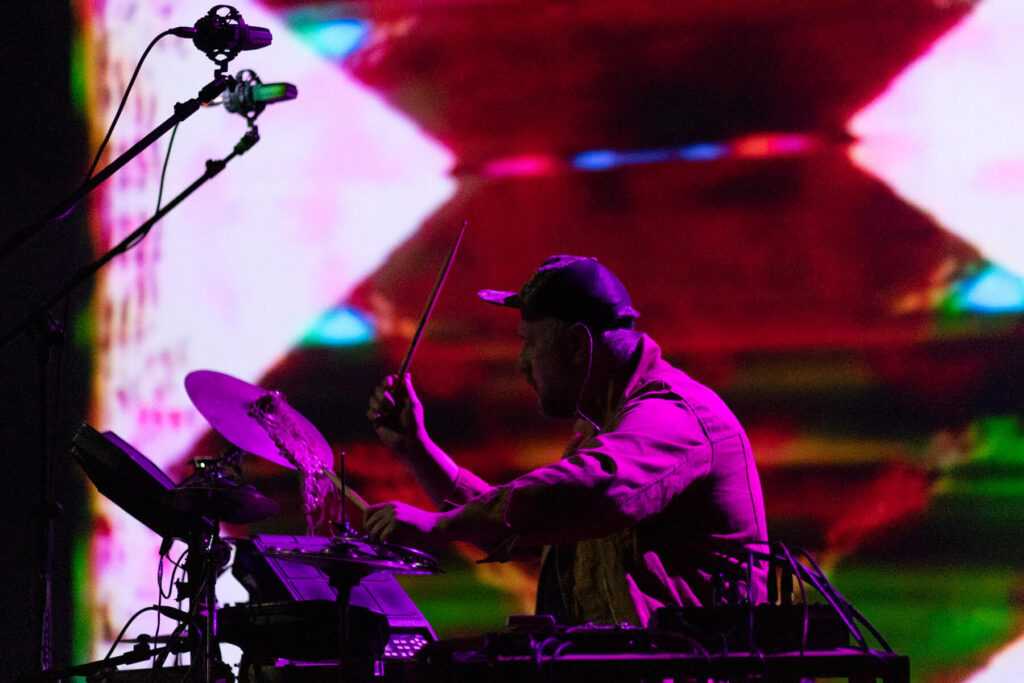
Meanwhile, RPA drummer Gary Gwadera discovered footwork music in 2022 and quickly realised that the triplets used by Chicagoan producers are not so different from the rhythm of oberek, a fast-paced traditional Polish dance. Given how many Poles are living in Chicago, his imagination ran wild, fusing the two sounds on Far, far in Chicago. The Footberk Suite. Through intensively polyrhythmic constructions, he explores the sense of community, the themes of dance battle present both at footwork and Polish village parties and juxtaposes them with recordings from the archives of Polish Radio.
The latter came to be thanks to Hanna Szczęśniak of the Polish Radio Folk Centre who also runs Nowa Tradycja festival, an annual contest championing the new and bold directions in folk music and artists such as Gwadera, who won the second prize in the competition and the Golden Gusle award for the most virtuosic performance.
Following the album release, Gwadera went on to meet and collaborate with RP Boo, the footwork originator with whom he delivered a commissioned project for Unsound Festival and started working in the studio together.
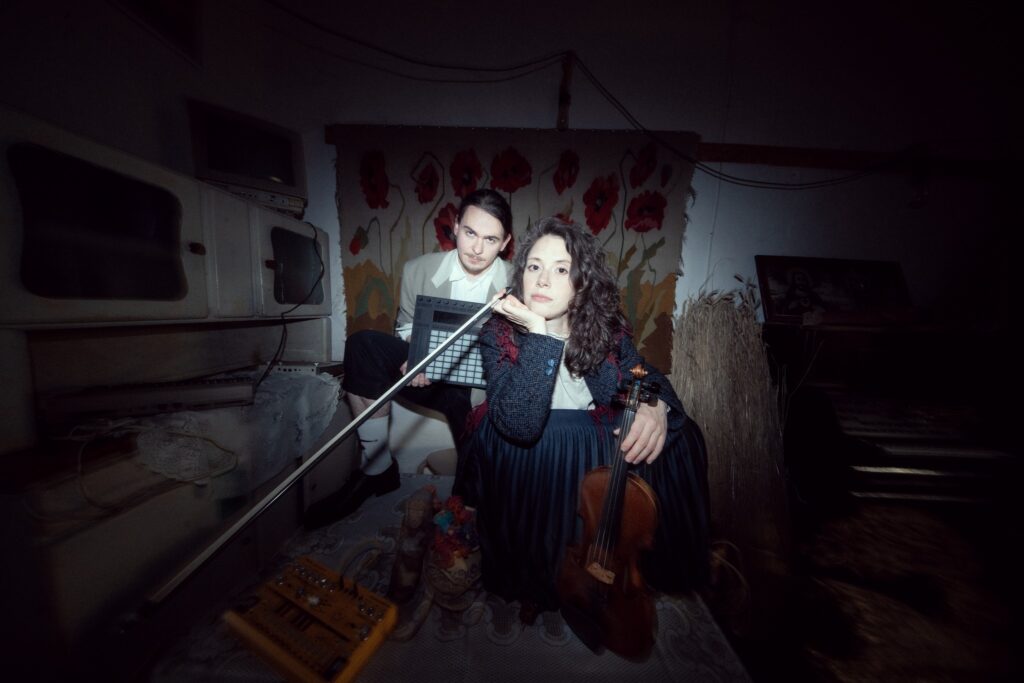
His colleague at RPA, Maria Stępień, among many other projects is also a member of Non-adaptive Dance Music, a project that could be described both as a band, and as an academic research project. Together with Andrzej Józefczyk, they explore traditional dance sounds through the lens of electroacoustic music, creating ghosts of the past through machine learning algorithms and visions of the future built from the manipulation of violin and drums through Ableton patches.
Digging in the Archives
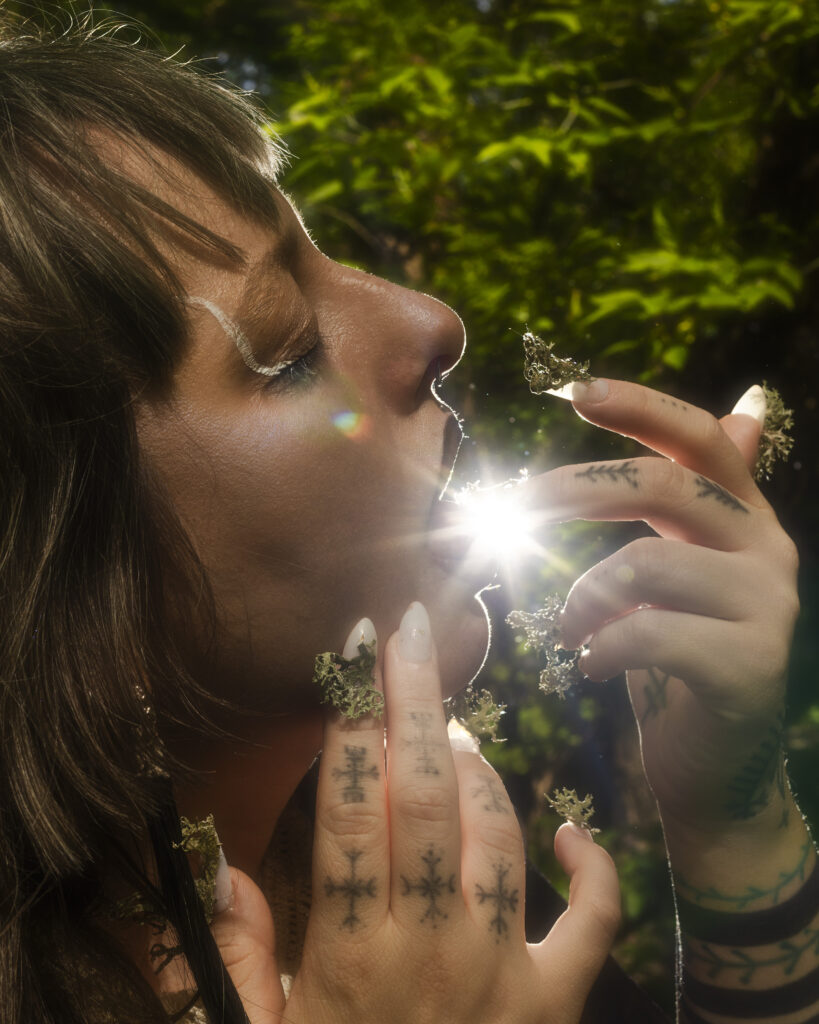
With most of the village musicians already gone, working with archives is often a must. It’s also one of very important inspirations and sources for Zosia Hołubowska aka Mala Herba. Mentored early in their career by Agata Harz and Remek Mazur-Hanaj of the legendary 90s avant-folk band Księżyc, Hołubowska explores beyond the experimental ends of music. They have worked on such diverse projects as sonifying photo archives of her home town of Olsztyn to explore the inability to establish a relationship with the place of birth or a grieving ritual informed by the vesper tradition to help people deal with the post-pandemic sense of loss. When recording as Mala Herba though, their sound and ritualistic approach is backed by a strong post-industrial beat rooted in EBM, well suited for underground clubs.
For their most recent project, Lovers / Lichens, Hołubowska recruited Edka Jarząb, Dominika Szelążek, Soil Troth, and Aemlx, a diverse cast of artists with background in traditional music, performance art, and even metal bands, joining them on a set of traditional instruments, including flutes, drums, wheel fiddle, and burczybas clashing with waves of electronic hum. Burczybas, a traditional Kashubian friction drum, is Aemlx’s instrument of choice. The weird buzzing sound of what is often called an anti-instrument is a perfect base for a disruptive project such as Apotropaic Activity, their most recent EP sharing a similar theme to recent work of Hołubowska, aiming to “transform the energy of horrors of the current world to transition to a new, better reality,” in the words of the artist.
Borderlands in the Centre (of Attention)
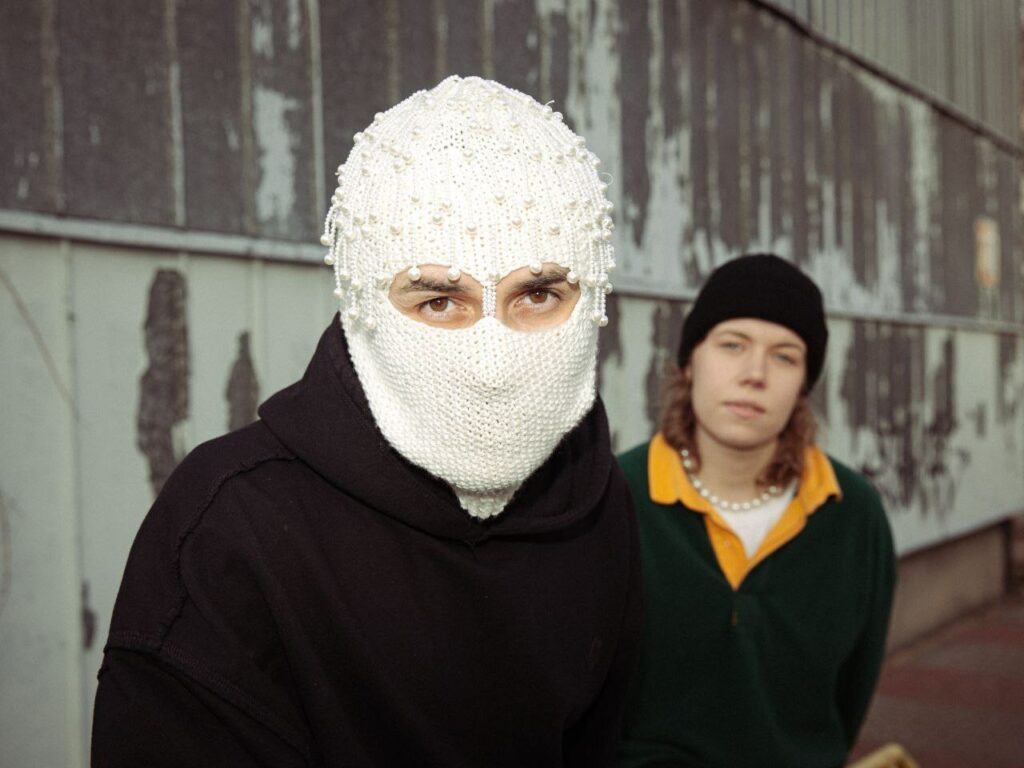
The mainstream attention was captivated by a duo of artists from Podlasie, the most eastern and most diverse region in Poland. Polish-Colombian producer Sw@da and singer Niczos went to create a combination of Global South dance music with traditional songs sung in the Podlachian language, shocking the modern Polish audiences with the idea that Poland is not so homogenised after all. Following their EP with Białystok’s rapper Maxim and then a full-length album, Sw@da & Niczos participated in Eurovision qualification with “Lusterka,” a de facto phonk song sounding like an echo of Brazilian internet culture resonating deep in archaic Podlasie vocabulary, and finished in second place. Their loss still turned out to be a huge win, landing them slots at festivals and radio play inaccessible before
Niczos also doubles as a violinist in Polish-Belarussian band Hajda Banda. While the band is devoting themselves to the traditional repertoire of the borderlands, it’s definitely worth noting the impact Mateusz Dobrowolski’s work has. The drummer is currently mentoring dozens of aspiring percussionists, soon to pick up frame drums in their own projects and bands.
Inward and Forward
By 2026 it really seems like there’s more crossover acts that loom at every corner, ready to take over the crowd’s attention. There’s Odpoczno making poetic and slightly psychedelic songs that could be classified as amazing contemporary indie music, surprisingly electronic in its production. There’s weirdly angular pop of Tuleje who take melodies of Konin region and wildly improvise on them. There’s Maniucha Bikont (member of already mentioned Niewte, among many other more traditional bands) making a step into the limelight with a deeply personal solo album that peaks with an incredibly unsettling “me too” story backed with a pulsing synth arpeggio.
From Naphta’s sorrowful village dubstep that went on to score #2 place on the annual Gazeta Wyborcza poll, ahead of many pop heavyweights; to Opla’s micromontage of rhythmic splices of oberek patterns that could easily fit in eMego’s catalogue; to Aleksander Nowak’s opera based on Baśń o wężowym sercu albo wtóre słowo o Jakóbie Szeli (The Tale of the Serpent’s Heart, or the Second Word about Jakób Szela—a fantasy novel loosely based on the history of the leader of a peasant uprising against the Polish gentry in Galicia in 1846)—; a lot of music recently released in Poland seems really saturated with ideas deeply resonated with the Radical Polish ethos.
Finally, there’s also Tercet Imperial who will release their highly anticipated debut album this year, expected to feature minimalistic and eerily digital, yet sexual takes on oberek music. Featuring Piotr Zabrodzki and Jan Emil Młynarski whose musical portfolio is probably longer than this article, it’s a spiritual successor of sorts to one of their previous bands, Oberkas Travel. Last year, together with Piotr Domagalski and Mateusz Niwiński, and legendary singer Maria Siwiec they delivered a fiery, psychedelic record that dazzled with unique synth swirls. Now, as a trio with Joanna Sztucka, a student of Siwiec, they pursue an even more electronic approach.
The breadth of acts trying to create something new by bridging the gap between distant past and the future suggests that the search for a modern Polish identity is no longer about looking eastward or westward, but rather inward and forward at the same time. From fusing the frantic rhythms of the oberek and other dances with electronic sounds or approaching them from experimental angles, a new dynamic language appears. A language that hopefully someday will allow Poles to speak without falling to the trappings of being a semi-peripheral country anymore.
About the author:
Łukasz Warna-Wiesławski is a Warsaw-based curator, music journalist, and the founder of Tańce, a label devoted to presenting modern dance music inspired by traditional Polish folk rhythms and vice versa. They have worked with Unsound Festival as its co-curator between 2012-2020. Since then, they’ve booked shows for artists, managed festivals, ran marketing campaigns, wrote tons of copy, and sent a million emails, while trying to get people interested in anything that’s left-field.