

Author: Kieran Press-Reynolds
A siren, a scream, and a volley of rubbery kicks fire off. It’s the beat for Ice Spice’s “Thootie” but squeezed through a torture chamber, sped-up and squeakified like crazy. Then the Bronx MC’s voice, accelerated to squirrel insanity, comes in with a stammering T-T-T-Thootie-Thootie. Soon a dembow beat pops in, but only for a second; we’re back to squelchy screamy mindlessness. This is ezmehfw’s “xxXTGIRL_THOOTIEXxx,” the transgendered and transmogrified hyperspeed remix. It appears on a new tape called COLITA DE RANA (“little frog’s tail”), under the banner of an emerging movement. “Dariaperreo” is the Latin version of dariacore, a genre of mashup madness that’s maybe the wildest new electronic sound of the 2020s.
I found dariacore from a friend on X who sent me a link to the initial tape, dariacore, back when it was just an album of jokey remixes, not a fully-fledged scene, in the summer of 2021. It was launched by Jane Remover as a joke; they dropped it on their backup SoundCloud alias, leroy. Loosely based on the droll TV show Daria, the music possesses popstars and niche rappers like voodoo dolls, blowing their voices out over breakbeats, Jersey club kicks, and baile funk insanity. As Jane kept dripping out loosies, a devoted cluster of bedroom sound design nerds entered the fray. It became a real albeit niche movement online in the US, although it never crossed over into the physical world in the form of concerts (only URL-only Discord shows). In the last couple of years, while the first wave of the American scene started to peter out, dariacore suddenly blew up in Japan. Partly thanks to the label Lost Frog Productions, dariacore became bigger thousands of miles overseas, spawning a handful of packed concerts. It’s traveled even further, touching down in Russia and iterating in Spanish with dariaperreo.
The new online scene is simultaneously underground and ubiquitous
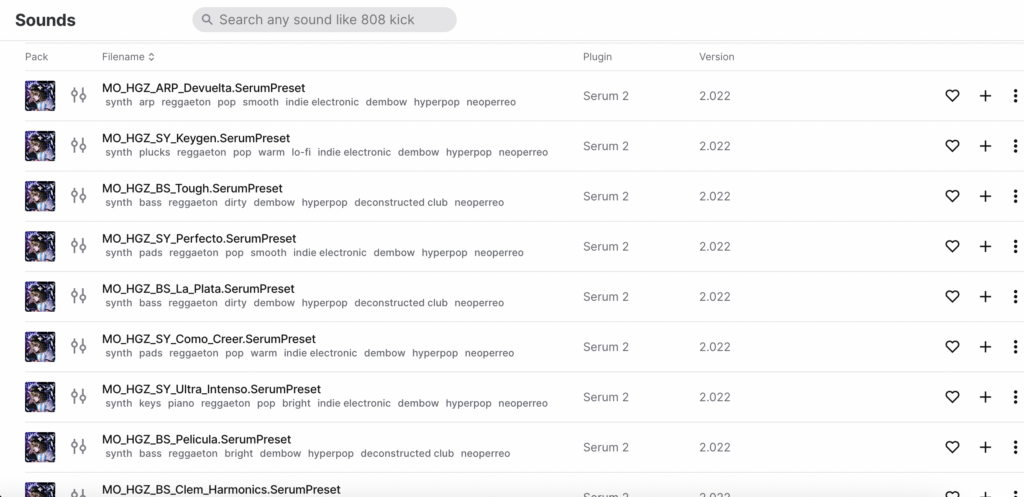
Dariacore is just one of a constellation of very online electronic genres that are simultaneously esoteric and everywhere—beloved by a small cluster of devotees scattered across the world. While the existence of digital electronic scenes isn’t new (remember vaporwave?), what feels fresh is the fragmented interconnectivity of it all. Instead of one sonic tide representing “internet music” in the 2020s, it’s a dizzying mishmash of maybe-genres and hard dance malevolence.This cultural exchange is facilitated by SoundCloud and platforms like Discord, packed with channels of foreign DJs who trade tips and hop on screen-share calls to lab. TikTokers list all the various national strains of EDM that belong to certain regions, simultaneously flattening each style and putting new people on. Meanwhile, sample libraries like Splice make it easier than ever for producers to toy with frags of foreignness. The platform’s Moment collection offers intricately sculpted kits: there’s heartgaze’s neoperreo (containing a “vocal glitch akrigito” [the Esperanto word for sharpened], cumbia drums, voluptuous reggaeton 808s, a “rompeoido” [ear-splitting] shiver), Dutch producer Jukaa’s shimmery sines and arps and whip-crack percs.
For some compilations, labels have devised local sample packs and shipped them to artists across the world. Spanish label Felina’s third edition of Latin Crush is built on a sample pack from Colombia’s Caribbean coast that was sent to artists in Ecuador and Peru along with Slovakia. The result is a fusillade of country-crossing freakiness. GENOSIDRA’s highlight “SI MI MUJÉ ME PEGA ES X MI BIEN” begins with what sounds like a raw audio capture of drumming, hand claps, and some kind of demented didgeridoo, before everything spins into a psychotic rave ritual.
A shortlist of some underground-global electronic centres and sounds
Colombian producer CRRDR’s “LatinCore,” a pan-Latin macro-genre, and Muakk, the label he founded with Aleroj
- They are the self-proclaimed godfathers of “uwuracha,” a Kawaii-fied parody of the thudding, wubby Colombian EDM sound guaracha; don’t be distracted by its cuteness, though, this sound pummels
- CRRDR has released loads of “LATINCORE & UWURACHA” sample packs to encourage passersby to experiment with Latin Tek
The furry-friendly label Deprerreo, based out of Barcelona and Mexico City
- They’ve released bliss-blasted trance from Chile, Brazilian club pop, and the Venezuelan group weed420’s Amor de encava, which makes dreamy plunderphonics out of bus noises
- Online clips show DJs playing with bright blue dog fursuits and asses shaking to shrieky reggaeton sirens


The Uganda-based Nyege Nyege Tapes
- It’s released DJ Travella, Sisso, and Maiko’s CPU-punishing 200 bpm singeli, a genre born in Tanzania (catch the madman DJ Travella making beats with a UCOM gaming controller—play his “Chapa Bakola Music Bass” for a Victorian child and they’d pass out)
- There’s also Brazilian producer DJ K’s electrifying PANICO NO SUBMUNDO, a pioneering tape in the scary-shadowy baile funk offshoot bruxaria (translates to “witchcraft”)
Eastern Margins, the London-based label dedicated to “Asian Alternative Culture”
- It has released DJ Love’s new-gen budots, the poingy, hyperactive style of Filipino EDM born in Davao City; the often improvised dance can include body rolls, chopping, slow-motion strutting
- Peep Malaysian artist Shelhiel’s SuperKiss series, which vaults from hyperpop to gabber to hints of jedag jedug, the viral Indonesian style known for its thrusting low end and frenetic TikTok edits (the genre name itself is an onomatopoeia for heartbeat)
- Its Redline series brings together a slew of country-spanning DJs who work in a cluster of aggro styles, from Indonesian funkot (mashing meaty basslines, party-hard electricity, and Indonesian rhythms) to Korean ppongtchak (old-school fusion of vigorous beats and happy-sad dramatic balladeering); everything is overclocked and ready to burst
The mission to produce and perfect a completely ‘global’ hybrid sound
Maybe the most emblematic release of the hybridised global scene is the November 2025 tape GLOBALCORE. Assembled by CRRDR, the lord of LatinCore, the project is an ambitious polycontinental crawl across Asia, America, and Europe. The Portuguese producer Colinas’ highlight “I Wanna Chat” treats the idea of stability as heresy; instead, it spins between breakbeats, triplet kicks, and glitch-heavy snap-splicing at rocketship-speed. Imagine a fleet of cyborgs swinging their hips at a Jersey club dance party. On Instagram, GLOBALCORE architects imagine internet noise “as a post-apocalyptic aesthetic or rather a map of what’s happening deep in the web.” Far-right nutjobs piss themselves fantasising about a deep state cabal of child-eating Satanists, but the real globalists just want to dance til their feet fall off.

A growing number of electronic producers pledge allegiance less to one country than these various labels, collectives, and friend groups they’re involved with. Like digital nomads who spend every month in a new country, some producers have an impossible-to-untangle jumble of influences. Skoolio, a Korea-born, German-based, American-affiliated producer in the SoundCloud beatpack community, says he’s inspired by the Italian Gigi D’Agostino’s Eurodance and Filipino budots. What defines him is less an affinity for one flag than this manic, peripatetic consumption of styles; he whips it into a gumbo that would break a taxonomy nerd’s brain.
The danger of reckless rootlessness
While globalisation can invite new communities and surprising collisions, it can easily erase or reduce meaningful regional differences. The platform dynamics that rule the online music economy can also incentivise the worst impulses. Commercially, this has resulted in influencer DJs and what’s called EasyJet or RyanAir DJs that manage to secure multinational bookings on the back of greasy networking and promo instead of talent.
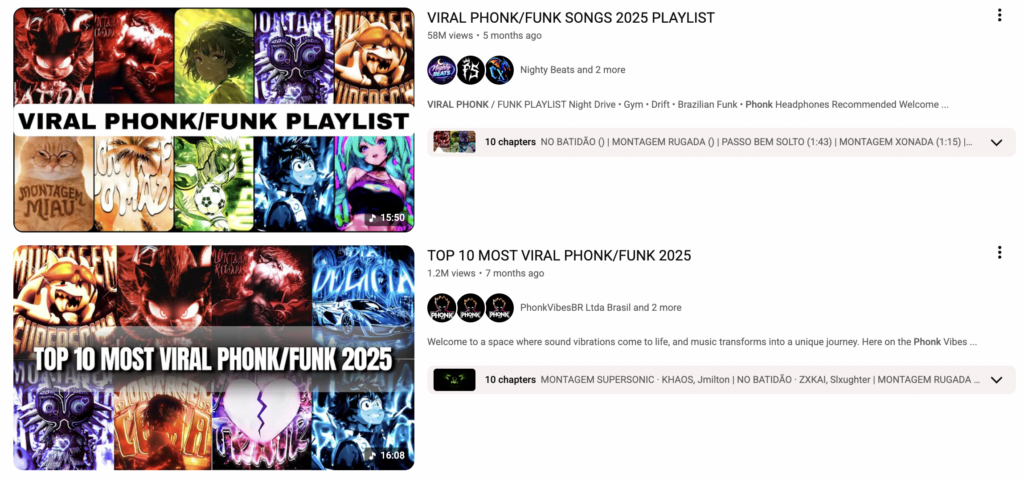
And musically, just look at the electronic genre phonk, which has become maybe the biggest online music fad of the 2020s. Phonk smacks like techno after eating 46 lbs of beef jerky and testosterone injections, convulsing with excruciating synths and MC jibber-jabber that’s lazily looped to hell. It’s so simple that anyone can worldwide-ify it—just throw whatever shallow exoticised cultural tic like an Andale! chant over the beat and voila, you’ve got “Mexican Phonk.” The result is numerous videos that play a highlight reel of country-specific phonks and engagement-bait by asking you to comment with your favorite. It might be the first truly global genre, in the sense that its modern incarnation didn’t start in a specific place a la Atlanta trap or Chicago drill; it’s the byproduct of a universal algorithm informing these grifting producers exactly how to make it sound if they want it to go viral.
I’m encouraged by the flood of electronic communities that are visible online yet deeply rooted in the real world, more concerned with physical togetherness than Instagram clout. In Hungary, Marmint Agency has become a kind of grassroots label scout—foraging for noise and ambient artists from the countryside and offering them space to play and a friend group. You can feel the tension in this music as it strives to retain its heritage despite the uprooting effect of the internet; many of these labels and artists certainly don’t want their idiosyncrasies to dissolve into the uniform melange ofterminally online sounds, but they want to use the internet to book gigs and get known. Eastern Margins crewmate Dirty K states this explicitly under their brightly brash Tokyo Renaissance release, which harkens back to a hedonistic era of 90s Japan and the birth of J-Rave and “hyper techno.” The tape strives to offer a “new localised, specific perspective on East Asian club culture as a counterpoint to the homogenisation brought by the internet.” Across the world, CRRDR and his GLOBALCORE allies clearly believe in the power of free musical trade, an anti-tariff optimism that sample-pack-sharing can produce unforeseen brilliance. Luckily, some of this music is just too weird to be co-opted by playlists and mercenaries.
About the author:
Kieran Press-Reynolds is a writer from the East Village, New York, who writes a weekly column for Pitchfork called Rabbit Holed and edits the music blog No Bells. They report on deep-internet subcultures, politics, and the esoteric chaos shaping the future.